Don't square the triangle.

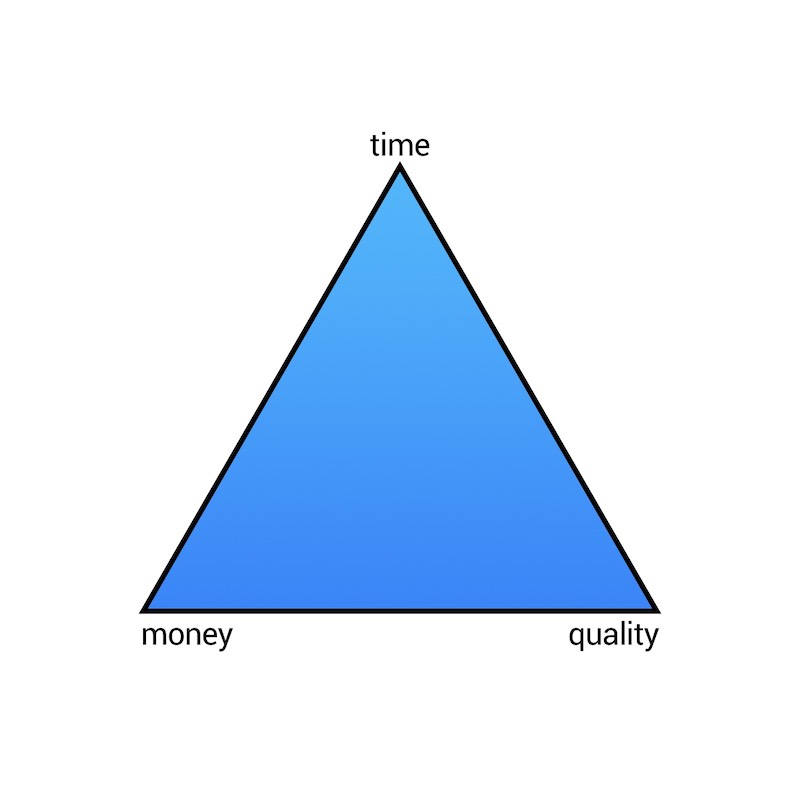
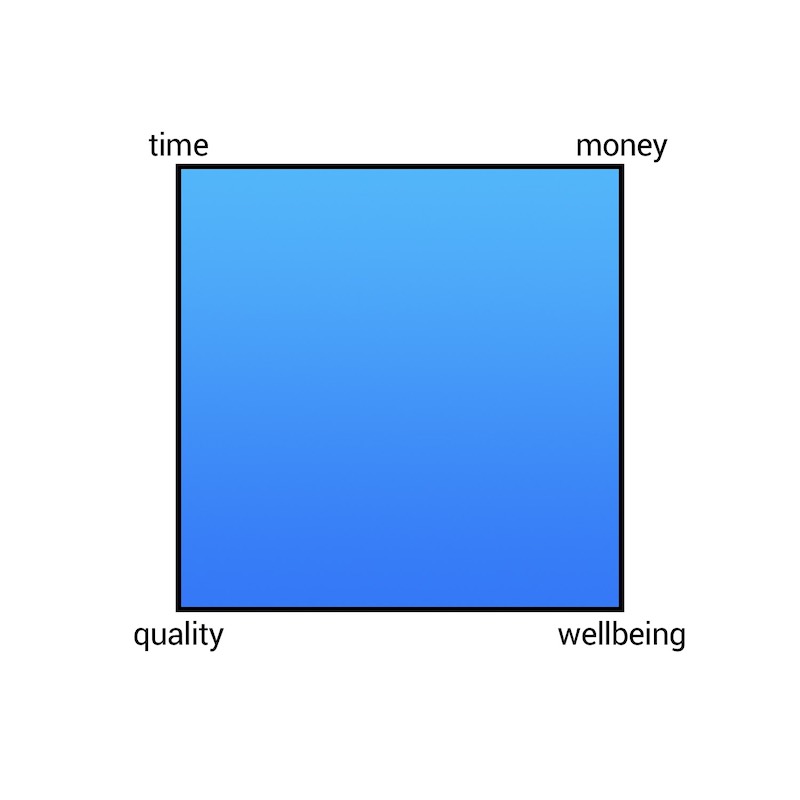
You know the old adage – time, money, quality, choose two? Many companies, knowingly or not, are actually sacrificing a hidden fourth vertex: the wellbeing of the people doing the work. It doesn't show up on the balance sheet. Until it does.
Pete Morrish game systems designer photograph

That old chestnut.
They say you can't have them all.
Pete Morrish game systems designer photograph

The common solution.
Good for capitalism, bad for us.
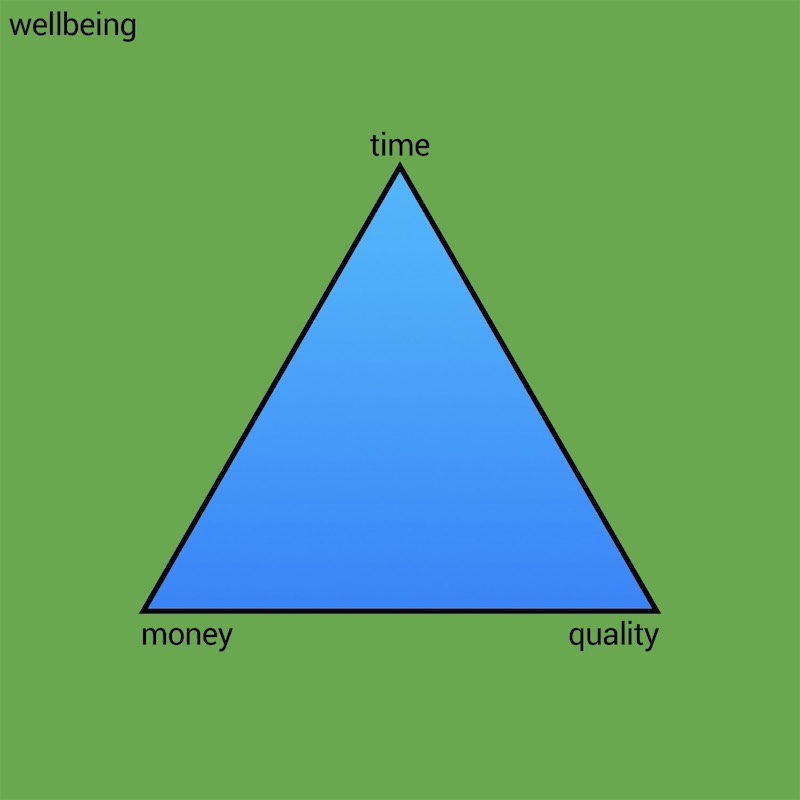
Pete Morrish game systems designer photograph

Start here.
Everything else follows.

I've spent 25 years in the games industry – including six years as solo dev and consultant, seven as Director of Production at a fully remote racing sim specialist, and four as a Studio Head for a ten-person indie – watching the triangle get squared. Sometimes knowingly. Often not. Always at a cost.

Most of that time I spent quietly redesigning the systems around it. Pipelines that fit the people running them. Processes that told the truth rather than protected the plan. Structures that absorbed complexity so the people inside them didn't have to.

That's what I do. And it's what I can do for you.

Learning the Hard Way...

I've done a lot of different jobs, at a lot of different scales, in a lot of different places. But looking back, no matter where I've been placed nor what I've been doing, I make things work for the people on the other end.

Human-centred, always. Because you get that right, and suddenly you're not fire-fighting, you're watering.

The System That Fit The Team: Project CARS 2

Large team. Remote. Multi-discipline. Significant expectations. The creative direction was strong – but before production scaled, the underlying structure needed to match the reality of the people running it, not the idealised version of them.

Different disciplines needed different things. Some leads worked best with high-level direction and room to breathe. Others needed granularity – task-level clarity, tight feedback loops, someone absorbing the noise above them. I built production systems around how people actually worked, not how a generic model said they should.

The result wasn't just a smoother production. It was a team that could sustain pressure without fracturing. One clear signal: after the turbulence of the first title, Project CARS 2 passed certification first time. Not through heroics at the end. Because the underlying structure held.

And all with a production team one-tenth the size you'd normally see for a project like this.

The Truth Nobody Was Telling: Fast & Furious Crossroads

I could see it coming. The production approach being used looked clean on paper º capacity planning, tasks assigned, boxes ticked. What it didn't account for was dependencies. Or critical paths. Or the gap between what the plan said and what was actually happening.

We in production couldn't do anything about it at the time. So instead, we built the right system in parallel – quietly, without interrupting anyone's workflow – and waited.

When the moment came, the switch took no time at all. Zero interruption. Infinitely better information. Which was, at that point, largely: yes, we're in trouble. But knowing you're in trouble, clearly and early, is the system working. Pretending you're not is the system failing the people inside it.

The game was an absolute disaster, but that's more down to the various egos involved, and a tale best told over a pint or two. I said we'd deliver, and I delivered, and 150+ people kept their jobs.

I shipped this and Project CARS 3, in the same calendar month, in the middle of a pandemic. Handed my notice in the very next day.

The Cost Nobody Logged: Timesheets

A client needed documented evidence of hours worked across projects. Standard requirement. The standard solution would have been: ask everyone to fill in a timesheet.

Instead I built a system in an afternoon that defaulted each person to their correct project, logged a full standard day in a single click, and only asked for more input when something had actually changed. The heavy lifting – setup, processing, maintenance – sat entirely on my end.

The people exposed to it needed a second or two. Most days, less.

It's a small example. But it's the same logic at every scale: complexity belongs with the person whose job it is to absorb it. Not distributed across an entire team as a daily tax on their time and attention.

When There's Nobody Else In The Room: Threkka

It started with six words scrawled on a sheet of paper: Joe Wicks makes Clash of Clans. Five years later: a fitness app without precedent, live on the App Store, designed from first principles, and built entirely solo.

No team means no buffer. Every decision – game design, production cadence, technical architecture, behavioural science, App Store delivery – landed on the same desk. The challenge was to juggle all this, without getting lost, without lsoing momentum.

I designed my own days. What worked for me was – 0700 to 1030, hard at work. Then exercise, lunch, and a snooze; then an afternoon shift from 1400 until the work was done. Very much marathon; very much not sprint. Output-based, not tick-box task-based. No holidays, but – and this is super-important – no burnout either. The system was designed around the human running it, not the other way round.

What that bought me was years of sustained, high-level output. And at times I was outpacing entire teams I'd worked with in the past. Not because I'm exceptional, but because I wasn't fighting the structure I was operating inside.

The core lesson I can take from this? Treat people like grown-ups. Let them work closer to their ideal. Design the system around them. Get it right, and the output takes care of itself.

Let's Talk

...So You Don't Have To.

I can work in a way that makes most sense for you. But to give you an idea of what that might look like, here are three options – different depths, different outcomes, different points of entry. It's not uncommon to start with the first as a lower-cost try-before-you-buy, before a deeper engagement once I've proved my worth.

Advisory Block

The entry point. A defined block of time, arms-length, cost-effective. I work with what you give me and tell you honestly what I see.

Less complete than a full Diagnostic, but a legitimate starting point – and a low-risk way to find out how I think.

Good for a specific problem, a second opinion, or low-cost try-before-you-buy ahead of other options.

Embedded Diagnostic

The most revealing option. I come in and work with your teams across your disciplines – design, production, code, management, HR – getting close enough to the work to see what it's actually costing the people doing it.

Not an audit from the outside, but a diagnosis from the inside.

Scope and duration agreed upfront.

Fractional Support

The natural follow-on from an Embedded Diagnostic. I stay involved, embedded at whatever cadence makes sense, and help fix what we found.

Sustained support without the overhead of a permanent hire.

Typically follows an Embedded Diagnostic. Structured in defined blocks.

Engagements are scoped clearly at the outset. Longer-term arrangements are designed to provide sustained senior support at a lower effective daily cost.

If in doubt, we start small.

Start a Conversation

Thank you!

Something went wrong.

I am not a robot.

Seeing the value in working together?

Trying to turn something complicated into something that actually ships?

Interested in something I'm working on?

Start here.

I read everything myself.

© 2026 Chock Hoss